Detroit Tigers vs Red Sox Match Player Stats Reveal Dominant Pitching in Fenway Shutout
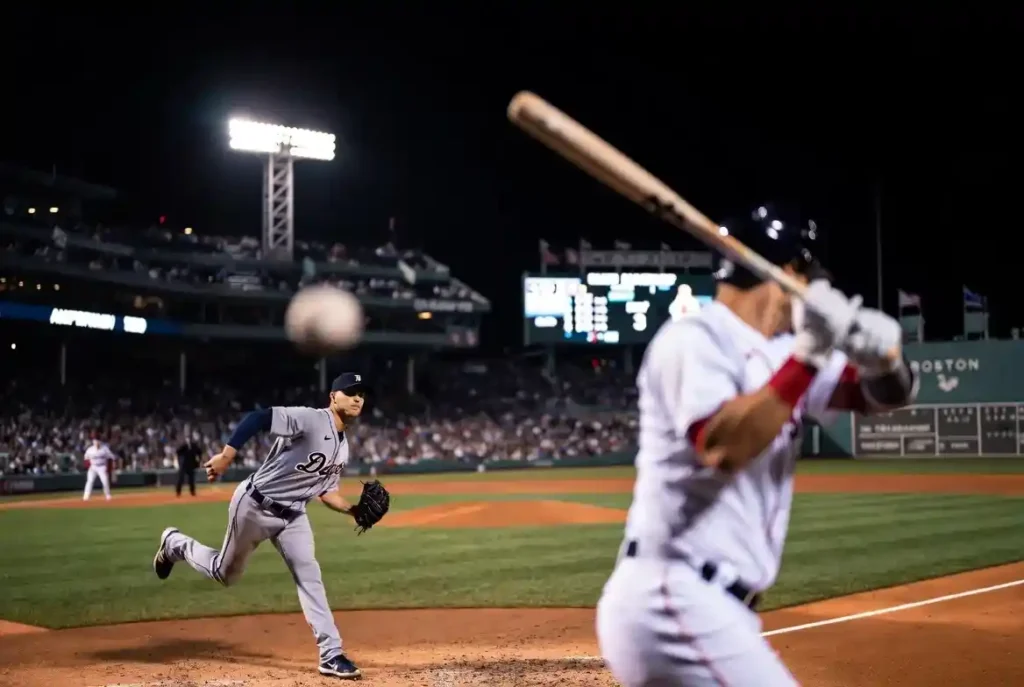
The box score often lies, but in the case of this Detroit Tigers vs Red Sox Match Player Stats sheet, it paints a painfully accurate picture of Boston’s offensive anemia. Staring at a zero in the run column deep into the game, the Red Sox lineup failed to adjust, leaving a sparse Tuesday night crowd at Fenway Park watching a masterclass in run prevention from the visiting dugout.
This was not a slugfest; it was a surgical dissection. The Detroit Tigers marched into hostile territory on August 2, 2026, and exited with a pristine 3-0 victory, fueled by an elite start from Tarik Skubal and a bullpen that refused to crack. While the final score suggests a close contest, the underlying Detroit Tigers vs Red Sox Match Player Stats highlight a gap in clutch hitting that kept the home side silent when it mattered most.
| Information | Match Details |
|---|---|
| Event | MLB Regular Season |
| Game | Detroit Tigers vs Boston Red Sox |
| Date | August 2, 2026 |
| Venue | Fenway Park, Boston, MA |
| Attendance | 33,917 |
| Winner | Detroit Tigers |
| Final Score | Tigers 3, Red Sox 0 |
| Broadcast | Bally Sports Detroit / NESN |
Core Match Statistics Overview
A glance at the cumulative numbers reveals a game decided by one swing with runners in scoring position. While hits were relatively scarce, the Tigers maximized their opportunities, whereas the Red Sox stranded a small village on the basepaths.
| Team Statistic | Detroit Tigers | Boston Red Sox |
|---|---|---|
| Runs | 3 | 0 |
| Hits | 7 | 4 |
| Batting Average | .219 | .133 |
| Runners Left on Base (LOB) | 6 | 8 |
| Home Runs | 1 | 0 |
| Stolen Bases | 1 | 0 |
| Strikeouts (Pitching) | 11 | 9 |
| Errors | 0 | 1 |
Pitching Dominance Silences the Crowd
The story of the night was unequivocally the inability of the Red Sox bats to string anything together against high-velocity fastballs and disappearing sliders.
- The Tigers’ pitching staff generated 15 swings and misses, predominantly on breaking pitches located below the zone.
- Boston registered a dismal 1-for-10 with runners in scoring position, failing to record a single extra-base hit in those critical spots.
Defensive Stability
While the offenses struggled, the gloves were mostly clean, but one miscue proved costly in shifting momentum toward the visitors.
- Detroit played error-free baseball, turning a crucial 6-4-3 double play in the fifth inning to erase a leadoff walk.
- A throwing error by Boston’s shortstop in the seventh inning extended the inning, directly setting up an insurance run for the Tigers.
Inning-by-Inning Breakdown
A low-scoring affair often hinges on a single frame, and the seventh inning proved to be the inflection point where the Detroit Tigers vs Red Sox Match Player Stats diverged sharply.
| Inning | 1 | 2 | 3 | 4 | 5 | 6 | 7 | 8 | 9 | R | H | E |
|---|---|---|---|---|---|---|---|---|---|---|---|---|
| Tigers | 0 | 0 | 0 | 1 | 0 | 0 | 2 | 0 | 0 | 3 | 7 | 0 |
| Red Sox | 0 | 0 | 0 | 0 | 0 | 0 | 0 | 0 | 0 | 0 | 4 | 1 |
- The Skubal Groove (Innings 1-5): Tarik Skubal set the tone early, striking out the side in the second inning. He leaned heavily on his four-seamer, consistently touching 99 mph, keeping the Boston hitters from timing his changeup.
- The Breakthrough (Inning 4): Riley Greene turned on an inside cutter, sending a solo shot 412 feet into the right-field bullpen. It was the only hard contact Detroit needed to flip the pressure entirely onto Boston’s shoulders.
- The Deflating Blow (Inning 7): After a costly Trevor Story throwing error, Colt Keith made Boston pay. He roped a two-run double down the left-field line, stretching the lead to 3-0 and effectively putting the game on ice against a deflated lineup.
Detroit Tigers Player Statistics
The Tigers didn’t need 15 hits to win; they just needed the right kind of hits.
- Riley Greene (LF): 1-4, HR, 1 RBI, 1 R
Greene’s solo blast was a game-winner. He played excellent defense in left, cutting off a potential double in the gap to keep a runner at first base in the sixth. - Colt Keith (2B): 2-4, 2B, 2 RBI
Keith continues to mature as a professional hitter. His seventh-inning double was a product of patience, waiting back on a slider instead of chasing the fastball up. - Tarik Skubal (SP): 7.0 IP, 3 H, 0 ER, 2 BB, 9 K
The ace was surgical. Skubal controlled the zone with 68% strikes and faced only two batters with runners in scoring position, escaping both jams with groundouts.
Boston Red Sox Player Statistics
The top half of the order, usually a force, vanished when the lights were brightest in this low-scoring duel.
- Rafael Devers (3B): 0-4, 3 K
A nightmare night for the cleanup hitter. Devers chased fastballs up and sliders away, looking visibly frustrated after striking out with two men on base in the sixth. - Jarren Duran (CF): 1-3, BB, SB
The lone bright spot on the basepaths. Duran reached twice and stole his 35th bag of the year, but his teammates couldn’t bring him home. - Brayan Bello (SP): 6.1 IP, 5 H, 2 ER, 1 BB, 7 K
Bello deserved a better fate. He induced 12 ground balls and kept the ball in the park except for one mistake to Greene, but the offense gave him zero support.
Statistical Leaders Summary Table
The direct comparison highlights how even pitching duel was, yet the run production was entirely lopsided.
| Category | Detroit Tigers | Boston Red Sox |
|---|---|---|
| Leading Scorer/RBI | Colt Keith (2 RBI) | N/A |
| Top Performer | Tarik Skubal (9 K, 0 ER) | Brayan Bello (7 K, 2 ER) |
| Hardest Hit | Riley Greene (HR) | Jarren Duran (Single) |
| Most LOB | Spencer Torkelson (2) | Rafael Devers (3) |
Analytical Breakdowns
Why the Detroit Tigers Won
1. Shutdown Starting Pitching
When your ace gives you seven shutout innings on the road, winning probability skyrockets. Skubal’s ability to pitch backward in fastball counts suffocated Boston’s timing.
2. Timely Two-Out Production
All three Detroit runs scored with two outs. This statistic is the purest distillation of the Tiger’s resilience. The table below shows the stark contrast in these high-pressure at-bats.
| Team | 2-Out Hits | 2-Out RBIs |
|---|---|---|
| Detroit Tigers | 3 | 3 |
| Boston Red Sox | 1 | 0 |
Why the Boston Red Sox Lost
1. The Cleanup Spot’s Cold Night
Rafael Devers batting 0-for-4 with three strikeouts is a formula for a shutout. Without protection from the cleanup spot, the Tigers simply pitched around the rest of the order.
2. Defensive Lapses in the Middle Infield
Baseball math is cruel. A fielding error in the seventh didn’t just extend the inning; it turned a 1-0 deficit into a 3-0 canyon. Giving elite teams four outs per inning drastically reduces the margin for error.
Historical Context & Advanced Insights
This game altered the trajectory of the season series, giving Detroit a psychological edge as they battle for a Wild Card spot.
Season Series Breakdown
This was the rubber match, showing how tightly contested these squads have been outside of this specific duel.
| Date | Venue | Winner | Score |
|---|---|---|---|
| July 10 | Comerica Park | Red Sox | 5-4 |
| Aug 1 | Fenway Park | Red Sox | 2-1 |
| Aug 2 | Fenway Park | Tigers | 3-0 |
Advanced Statistical Insights
Looking beyond the batting average, the Whiff Percentage tells the tale. Detroit’s pitchers forced a 33% whiff rate on breaking balls, a season-high mark for the staff. Conversely, the Detroit Tigers vs Red Sox Match Player Stats reveal that Boston hitters posted a negative Run Value (-5) against fastballs located in the upper third of the zone. Skubal exploited this heavily, generating five of his nine strikeouts on elevated heaters. The Red Sox chase rate on pitches outside the zone climbed to 31%, showing a lack of discipline symptomatic of a team pressing for a big inning that never came.
Game Implications & Key Lessons
What This Means for the Detroit Tigers
- Validates their pitching-first identity; if Skubal and the bullpen lock in, they can beat any lineup in the American League.
- Colt Keith’s emergence as a two-out RBI threat lengthens the lineup substantially behind Greene.
- Confidence soars by taking two of three from a division rival in a hostile environment.
What This Means for the Boston Red Sox
- The over-reliance on the long ball is creating a feast-or-famine offense that gets exposed by elite left-handed pitching.
- Defensive fundamentals are slipping; unearned runs are killing momentum in close games.
Key Lessons from the Match
- Dominant starting pitching neutralizes even the most historic ballparks.
- Two-out RBI hits are the statistical hallmark of championship-caliber teams.
- Errors in the infield lead directly to inflated pitch counts and big innings.
- A high strikeout rate from your star slugger can sink the entire offense.
- Velocity up in the zone remains the counter to Boston’s slugging approach.
- The game’s MVP was not just a player, but the specific stat line of 9 strikeouts against 0 walks.
Frequently Asked Questions
Who won the Detroit Tigers vs Red Sox game?
The Detroit Tigers won the game with a final score of 3-0 against the Boston Red Sox.
What were Tarik Skubal’s pitching stats?
Tarik Skubal delivered a dominant performance, throwing 7.0 innings, allowing only 3 hits, 0 earned runs, 2 walks, and recording 9 strikeouts.
Who scored the runs for the Detroit Tigers?
Riley Greene scored the first run on a solo home run. The remaining two runs were batted in by Colt Keith on a seventh-inning double.
How did Rafael Devers perform?
Rafael Devers had a difficult game, going 0-for-4 at the plate with three strikeouts, leaving multiple runners stranded in scoring position.
What was the key turning point in the match?
The key turning point was the top of the seventh inning when a Red Sox throwing error opened the door for a two-run double by Colt Keith, extending the lead to 3-0.
Where was the match played?
The match was played at Fenway Park in Boston, Massachusetts, with an attendance of 33,917.
Conclusion
The final scorecard offers a blunt assessment of modern baseball: velocity and sequencing beat power when the latter lacks discipline. The Detroit Tigers came into Fenway with a plan to elevate fastballs and punish mistakes, and they executed it perfectly. For Boston, the visual of nine runners left on base serves as a stark reminder that offensive firepower requires a cool head in clutch situations.
You May Also Like

Lucky77 Slot Gacor: A Complete Guide to Online Slot Entertainment
Online gaming has become one of the most popular forms of digital entertainment, offering players exciting experiences from...
Read Story
PRAGMATIC88: A Guide to Online Gaming Platforms and Features
Online gaming has become a popular form of digital entertainment. Many platforms now offer different games, simple interfaces,...
Read Story
Mets vs Phillies Match Player Stats: Francisco Lindor’s Stellar Night Leads New York to 7-4 Victory
Struggling to find a true deep dive into Mets vs Phillies match player stats that goes past the final score?...
Read Story