The Ultimate Tennis Ball Guide: Size, Color, Machines & Everything You Never Knew
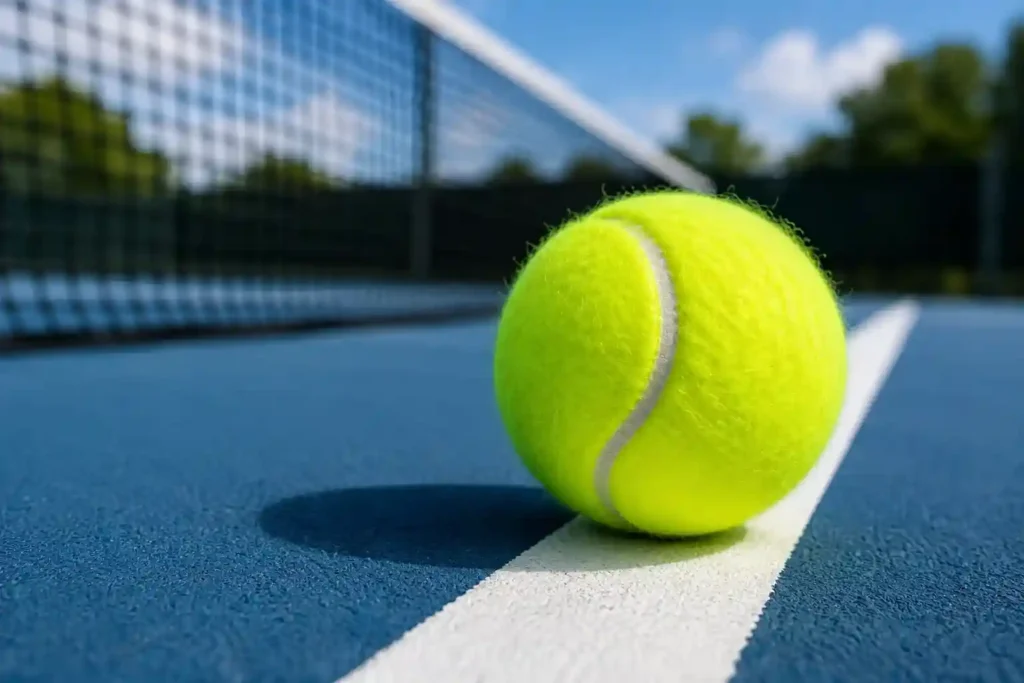
Most people think a tennis ball is just a fuzzy yellow sphere you hit over a net. They could not be more wrong.
From the exact diameter that governs professional play to the bizarre reason your dog goes absolutely crazy over one, this humble piece of sporting equipment hides layers of fascinating engineering and history.
Whether you are shopping for the best tennis ball machine, searching for a tennis ball drawing reference, or simply wondering what color a tennis ball actually is, this guide covers every angle you never thought to explore.
Stick around because the section on tennis ball pressurizers alone could save you hundreds of dollars a year.
How Big Is a Tennis Ball? Exact Dimensions & Diameter Breakdown
The official tennis ball diameter falls between 6.54 and 6.86 centimeters, or roughly 2.57 to 2.70 inches. The International Tennis Federation enforces this range strictly at every professional tournament worldwide.
If you have ever asked “how big is a tennis ball” while holding one in your palm, you are not alone. Most recreational players never measure their equipment and simply assume all balls are identical.
That assumption costs players consistency. A ball at the smaller end of the range travels faster through the air and bounces slightly lower than one at the maximum allowed size.
Tennis Ball Size by Category
Not every tennis ball on the market targets adult players. Manufacturers produce distinct size categories for different skill levels and age groups.
- Stage 3 Red Ball: 75% slower, oversized at roughly 8 to 9 cm, designed for children under eight.
- Stage 2 Orange Ball: 50% slower, standard tennis ball size, used by kids aged eight to ten.
- Stage 1 Green Ball: 25% slower, regulation diameter, bridges juniors to full competition.
- Standard Yellow Ball: Full speed, regulation tennis ball diameter, used in all adult and pro play.
| Category | Diameter (cm) | Speed Reduction | Target Age |
|---|---|---|---|
| Stage 3 Red | 8.0 – 9.0 | 75% | Under 8 |
| Stage 2 Orange | 6.54 – 6.86 | 50% | 8 – 10 |
| Stage 1 Green | 6.54 – 6.86 | 25% | 10+ |
| Standard Yellow | 6.54 – 6.86 | 0% | Adults & Pros |
The data above shows that while diameter stays relatively consistent from Stage 2 onward, the internal pressure and felt composition change dramatically to control speed.
What Color Is a Tennis Ball? The Surprising History Behind Tennis Ball Color
Ask ten people “what color is a tennis ball” and you will likely get ten confident answers saying yellow. The reality is far more interesting than that simple response.
Tennis balls were originally white or black, depending on the court surface, for nearly a century of competitive play. The switch to the iconic optic yellow happened in 1972 when the ITF mandated the change for better television visibility.
Research from color scientists at the University of Rochester actually found that human perception splits on this question. Some brains genuinely process tennis ball color as green, while others see unmistakable yellow.
Why Optic Yellow Dominates the Market
The specific shade is called “optic yellow” or “fluorescent yellow,” and it sits right at the peak wavelength of human visual sensitivity. This means your eyes detect it faster than almost any other color against blue skies and green courts.
Brands like Wilson, Penn, and Dunlop all use slightly different formulations of this tennis ball color, which is why a fresh can from each brand looks subtly distinct under stadium lights.
Best Tennis Ball Machine Options to Transform Your Training
Solo practice separates good players from great ones, and a tennis ball machine is the single most effective tool for logging thousands of extra reps without a hitting partner.
The market has exploded in recent years, with options ranging from compact portable units to full-size programmable beasts that simulate match-level spin and pace.
Top Picks Across Budgets
- Slinger Tennis Ball Machine: The Slinger tennis ball machine has taken the amateur world by storm thanks to its lightweight bag-style design, built-in ball hopper, and surprisingly powerful topspin delivery. It weighs under 15 kg and fits in a car trunk effortlessly.
- Spinshot Plus-2: A mid-range favorite that offers full remote control, programmable drill sequences, and oscillation patterns that mimic real rally conditions.
- Lobster Sports Elite Grand V: The premium choice for serious competitors who need heavy topspin, slice, and random interval feeding at speeds exceeding 80 mph.
What to Look for When Buying
- Ball capacity: A tennis ball hopper that holds at least 100 balls keeps you hitting longer between reloads.
- Spin variety: Topspin, flat, and slice options let you replicate different opponent styles.
- Battery life: Aim for a minimum of four hours on a single charge so marathon sessions never get cut short.
- Portability: If you commute to courts, weight and handle design matter more than you think.
Tennis Ball Launcher for Dogs: Keep Your Pup Entertained for Hours
If you own a high-energy retriever or terrier, you already know that throwing a ball by hand gets old fast. A tennis ball launcher for dogs solves this problem brilliantly.
Automatic dog tennis ball launcher models like the iFetch and PetSafe Ballistic now let your dog reload the machine themselves by dropping the ball into a top-mounted funnel.
This self-play loop can burn through an hour of exercise while you sip coffee on the porch, making it one of the smartest pet investments you will ever make.
Safety Tips for Dog Launchers
- Always use mini or medium balls sized for your dog’s mouth to prevent choking hazards.
- Limit sessions to 15 to 20 minutes to protect your dog’s joints from repetitive sprinting.
- Inspect the felt regularly because dogs shred tennis ball fuzz quickly, and ingesting it causes intestinal blockages.
Opening a fresh can of pressurized balls feels amazing until you realize they go flat within two weeks of regular play. A tennis ball pressurizer reverses this decay by storing used balls in a sealed, pressurized tube.
Brands like Gamma and Tourna sell pressurizers that restore bounce to balls you were about to throw away, effectively doubling or tripling their usable lifespan.
Pair a pressurizer with a sturdy tennis ball hopper that holds 75 to 150 balls, and you will stop bleeding money on new cans every single week.
The Function of Table Tennis Ball vs. Regular Tennis Ball
Many people confuse the function of table tennis ball equipment with regular tennis gear, but the two sports share almost nothing beyond a net.
A table tennis ball weighs just 2.7 grams, measures 40 mm in diameter, and is made from celluloid or modern ABS plastic. Its function is to create extreme spin and speed on a tiny 9-foot table.
A standard tennis ball weighs roughly 58 grams, is over six times wider, and relies on compressed rubber and woven felt to generate bounce on a 78-foot court. The physics are entirely different.
For designers and content creators, finding a clean tennis ball PNG or tennis ball clipart is a surprisingly common task. Sites like Flaticon, Freepik, and Pixabay offer thousands of transparent-background assets for presentations, YouTube thumbnails, and social media graphics.
If you prefer hand-drawn work, a simple tennis ball drawing starts with a circle, two curved seam lines, and short hatching strokes to simulate the fuzzy felt texture. It is one of the easiest sports objects to sketch for beginners.
Tennis Ball Bird: The Unexpected Wildlife Connection
You might wonder what a tennis ball bird even means. The term refers to a viral trend where pet parrots and cockatiels become obsessively attached to tennis balls as toys.
These birds grip the ball with their feet, chew the felt, and even attempt to “feed” the ball to their owners as a bonding behavior. Avian behaviorists say the bright optic yellow color and soft texture trigger foraging instincts.
Just make sure you supervise play closely because birds can ingest felt fibers, which poses the same digestive risk as it does for dogs.
Frequently Asked Questions About Tennis Balls
What is the exact tennis ball diameter in inches?
A regulation tennis ball measures between 2.57 and 2.70 inches across. The ITF mandates this range for all sanctioned tournaments, and any ball outside it gets rejected during pre-match inspection.
What color is a tennis ball officially?
The official tennis ball color is “optic yellow,” a fluorescent shade introduced in 1972 for television visibility. Before that, white and black balls were the standard for over a century.
How does a tennis ball pressurizer actually work?
A tennis ball pressurizer seals used balls inside a tube and pumps in air at roughly 14 PSI, matching the internal pressure of a fresh can. This forces gas back through the rubber core and restores bounce.
What is the best tennis ball machine for beginners?
The Slinger tennis ball machine is widely considered the best entry-level option because of its low weight, simple controls, affordable price point, and built-in ball hopper that holds around 140 balls.
Can I use a tennis ball launcher for dogs indoors?
Some compact dog tennis ball launcher models work indoors with soft foam balls designed for safe indoor use. Never use a full-power outdoor launcher inside unless you enjoy replacing lamps and picture frames.
What is the function of table tennis ball spin?
Spin on a table tennis ball manipulates airflow to create dipping trajectories and unpredictable bounces. Topspin drives the ball downward, backspin floats it, and sidespin curves it laterally across the table.
Where can I find free tennis ball clipart and PNG files?
Websites like Pixabay, Freepik, and PNGTree offer hundreds of free tennis ball PNG and clipart files with transparent backgrounds. Always check the license before using them in commercial projects.
Final Thoughts on the Humble Tennis Ball
The next time you pop open a fresh can and hear that satisfying hiss of pressurized air, take a second to appreciate the engineering packed into that small yellow sphere.
From the precise tennis ball size that governs Grand Slam play to the quirky tennis ball bird phenomenon that delights parrot owners worldwide, this piece of equipment touches more lives than most people realize.
Grab a tennis ball pressurizer to stretch your budget, invest in a tennis ball machine if you want to level up your game, or just toss one to your dog and enjoy the pure joy it brings.
The tennis ball is deceptively simple on the outside and endlessly fascinating once you look closer. Now go hit the courts.
You May Also Like

Aryna Sabalenka: The Complete Guide to Tennis's Most Dominant Force
Most tennis fans remember the exact moment Aryna Sabalenka announced herself to the world. That thunderous forehand echoing...
Read Story
The 5 Best Soccer Cleats of 2026: Dominate Every Match With Ultimate Control
Most players Soccer Cleats blame their poor touch on bad luck, bad pitches, or tired legs. The real...
Read Story
New England Patriots vs Bengals Match Player Stats: Full Game Breakdown
By Jordan Mitchell, Senior NFL Stats Analyst | Updated July 26, 2026 Finding reliable New England Patriots vs...
Read Story